Local detail
Where People Go Wrong
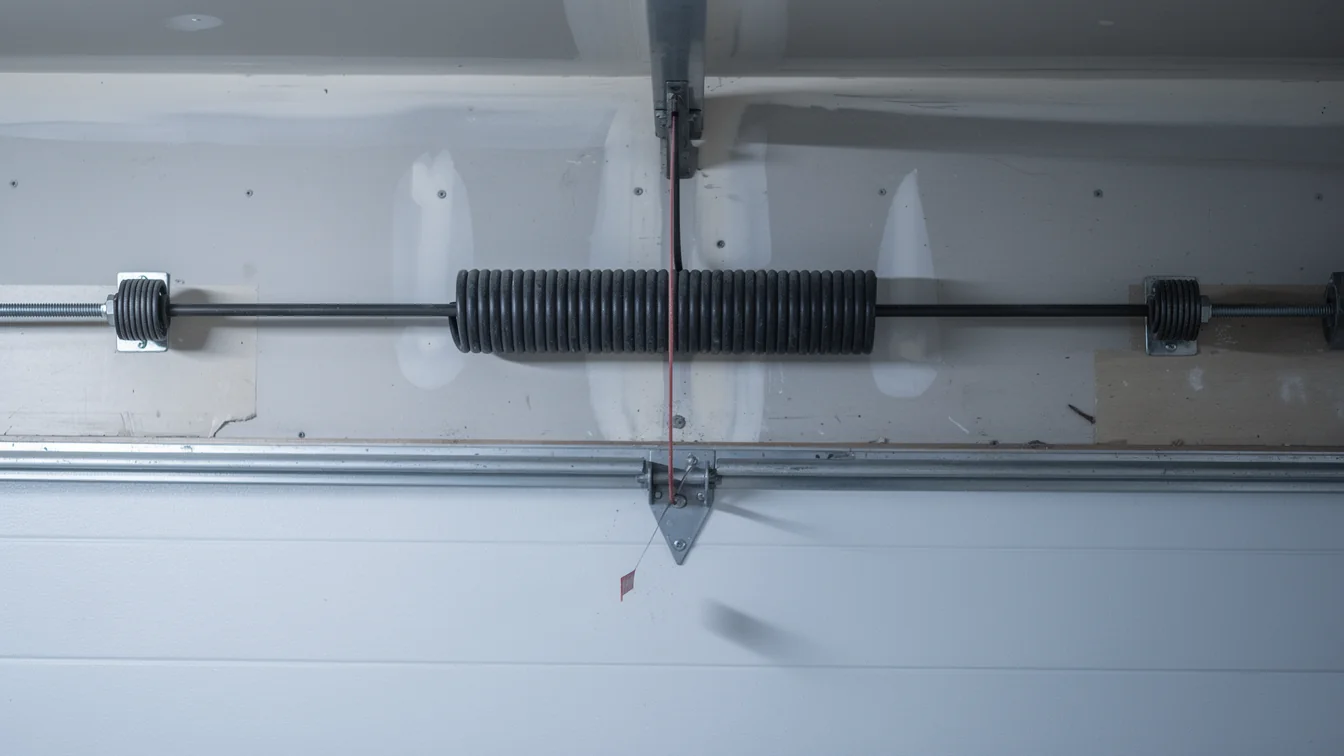
Most of the calls we get start the same way: a door that worked fine last month and now grinds, sags, or won't close. The first mistake is treating that like a generic appliance problem. It isn't. Housing in this service area went up mostly between 1975 and 2018, with the median build year sitting at 1995, and the bulk of it clustered in 1980s and 90s construction across the eleven areas we cover. That means a huge share of the doors out there are original builder-grade units, or a single replacement from decades back, running on torsion springs rated for a duty cycle that's long past expired. Homeowners call asking for a tune-up when the real issue is a spring that's reached the end of its rated cycles and is about to let go, often on a double door where the failure is harder on the opener. The other common error is ignoring the opener's drive gear because the door itself still moves. On a unit that old, the gear is usually stripped plastic, not metal, and it fails quietly until the day it doesn't move at all. Catching that early costs a part. Catching it late costs a service call plus a door that won't open.
The area
What the Weather Here Does to It
This area sits in a mild climate band, but it isn't frost-free. We get stretches of real cold mixed into mostly moderate weather, and that swing is harder on a garage door than steady cold ever would be. A torsion spring loses a little flex every time the steel contracts on a cold morning after weeks of mild temperatures relaxed it. It's the freeze-thaw cycling, not the depth of the cold, that fatigues the metal faster than the spring's rating assumes. You'll notice it as a door that closes fine most of the year and then, on the one cold snap, drops the last foot with a bang or won't seal at the bottom. Lubricant thickens in that same cold snap, which slows the rollers and puts more load on the opener's gear right when the spring is already working harder. None of this requires a hard freeze to show up. A handful of below-freezing mornings a winter is enough, given how long the mild stretches between them let things sit unused and under-lubricated. We don't see the ice-dam or snow-load damage you'd get further north. What we see instead is quiet fatigue that shows up as a sudden failure on the coldest morning of the month.
What we find
What Is Going On
Put the housing age and the climate together and you get a predictable pattern across this service area. A door installed when a house was built in, say, 1994 is now running original hardware three decades into a service life that torsion springs typically don't reach. Across roughly 46,120 households and 19,069 owner-occupied houses in the area, a large share of those garages still have the builder's original spring, original opener, or both. That's not neglect on the homeowner's part - it's just math. A spring rated for a given number of cycles doesn't care that the house looks fine; it's been opening and closing for thirty years regardless. The same stock shows up whether you're near Fort Hood, five miles out, Harker Heights, also five miles, or further toward Nolanville and Copperas Cove - the building boom that shaped this area didn't stop at a city line. What we're usually diagnosing isn't a mystery fault. It's a part at the end of its rated life, in a house built when a lot of other houses nearby were built, all reaching that point around the same stretch of years. We won't sell you a new spring if the opener's gear is also shot and due - at that point replacing both at once is usually the better money than two separate calls.
How we work
What Changes With the Season
Through the long mild stretches, wear is slow and even - a little more friction in the rollers, a little more sag in an old torsion spring, nothing dramatic. The failures cluster around the handful of cold mornings each winter when contracted steel meets a spring that was already near its limit. That's when we see the spike in broken-spring calls, not during the heat of summer when people assume doors take the most punishment. If your door is original to a house built in the 1980s or 90s, the smart move is checking the spring before the first cold snap, not after it snaps. Lubricating the rollers and hinges ahead of the cold matters more here than most people expect, because the mild months let grease sit unused long enough to gum up right when the temperature drops. We'd rather tell a homeowner their spring has a season or two left and let them plan for it than get the emergency call on the one freezing morning a year when the whole street seems to need the same repair. That's also the honest limit of what maintenance can do - once a spring's cycle count is run out, lubricant and adjustment buy you weeks, not years.
Talk to a local pro
Garage door trouble in Killeen?
Same-day service with honest, upfront quotes.